
Obesity remains a pervasive U.S. health challenge, affecting about 42.4% of adults and contributing to diabetes, hypertension and cardiovascular disease.[1] People with obesity frequently encounter stigma in clinical settings; person-first, destigmatizing language is recommended to mitigate harm and build trust.[2,3] Contemporary reviews show how stigma undermines engagement, adherence and outcomes, making language choice and clinician attitude central to quality care.[4]
Motivational interviewing (MI) — a collaborative, person-centered counseling approach — aims to elicit patients’ goals and motivation for change while avoiding judgment. Evidence associates MI-inclusive behavioral interventions with improvements in health behaviors such as physical activity.[5] MI is a skills-based method and clinicians often lack chances to practice core techniques (e.g., OARS — Open-ended questions, Affirmations, Reflective listening and Summarizing), receive feedback, and translate MI into realistic, measurable plans.
Simulation and digital training can help. Studies show that reflective simulation-based etraining has increased MI knowledge, confidence and competence; immersive/virtual environments have supported rehearsal of MI-consistent conversations; and digital simulators for weight-related communication have improved self-assessed communication skills in low-risk settings.[6–8]
We developed and evaluated an online continuing medical education (CME) activity using an AI-driven virtual patient intended for primary care clinicians to practice MI for obesity care. This manuscript reports preliminary outcomes (data from June 30, 2025 through Aug. 10, 2025) and situates them within current literature on MI, simulation and AI.
Methods
Design and Participants
The self-paced, internet-based CME activity, “Practicing Motivational Interviewing for Obesity Care: An Interactive Virtual Patient Experience,” launched June 30, 2025 (expiration June 30, 2026), and was supported by an educational grant from Eli Lilly. This report includes 18 completed sessions from 16 unique clinicians (physicians, NPs, PAs) who finished all required components by Aug. 10, 2025.
Learning Journey and Simulation Scenario

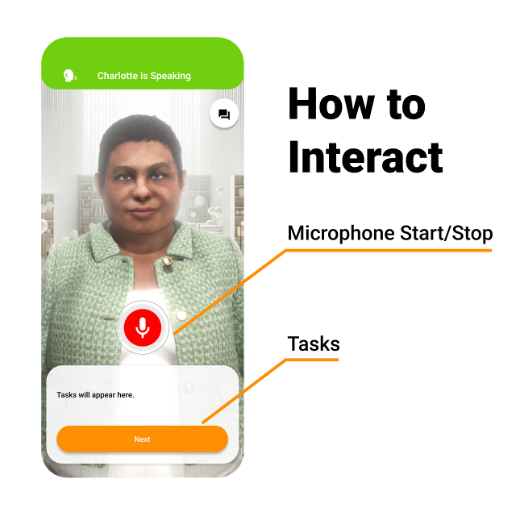
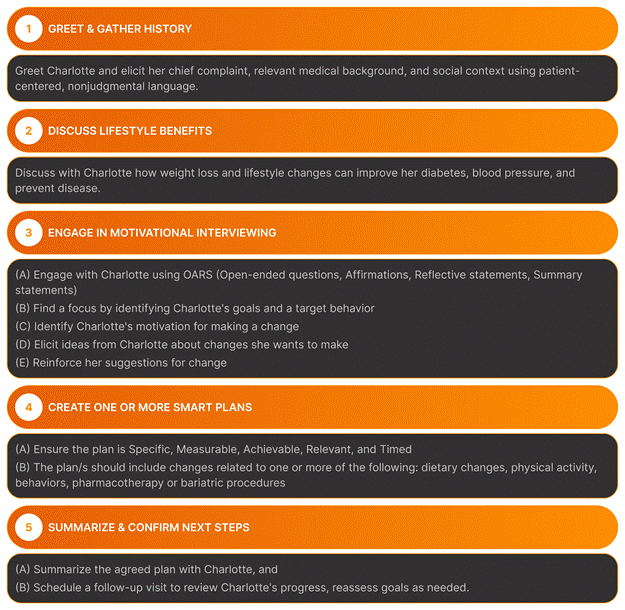
During this 0.50 CME credit course, learners completed a concise micro-module on stages of behavior change and core MI principles for obesity. This was followed by an AI-driven virtual-patient encounter with Charlotte, a 40-year-old with class 2 obesity, type 2 diabetes, and hypertension, practiced across five tasks (rapport/history; lifestyle benefits; MI using OARS; creation of a SMART plan; summarizing and planning follow-up). An instant automated feedback report, summarizing task scores (1-5) with targeted strengths and areas of improvement, is presented to each learner after the simulation.
Data Collection and Analysis
Deidentified data captured pre/post multiple-choice responses, comfort ratings (5-point scale), task scores, perceived value (1-5) and free-text comments. Outcomes were summarized descriptively. Changes in knowledge and comfort were calculated as weighted relative differences (pre- to post-activity). Open-ended responses were first analyzed by an artificial-intelligence tool to detect recurrent themes and then double-checked by a human reviewer for accuracy and nuance. Given the small sample and single-arm design, no inferential statistics were performed.
Results
Participation and Demographics
Sixteen clinicians completed 18 sessions. Most were physicians in primary care disciplines; about half reported more than 20 years in practice.
Knowledge Performance
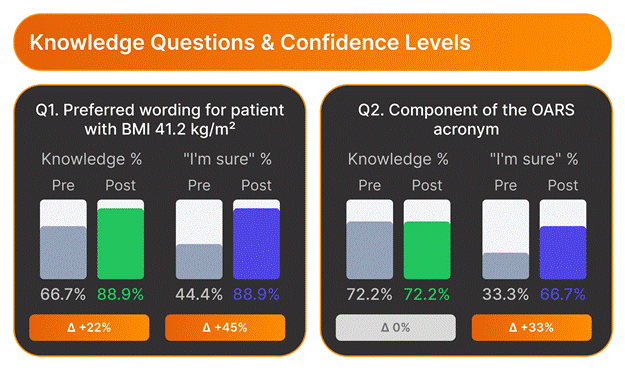
Pre-activity responses showed moderate familiarity with person-first language and core MI elements. Post-activity responses indicated higher correct selection of respectful terminology and greater answer certainty. In short, both knowledge (0-22%) and confidence (33-45%) improved.
Self-reported Comfort
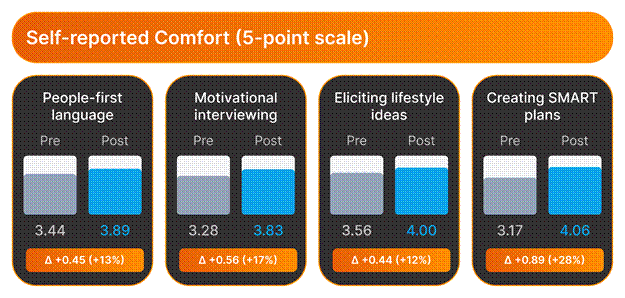
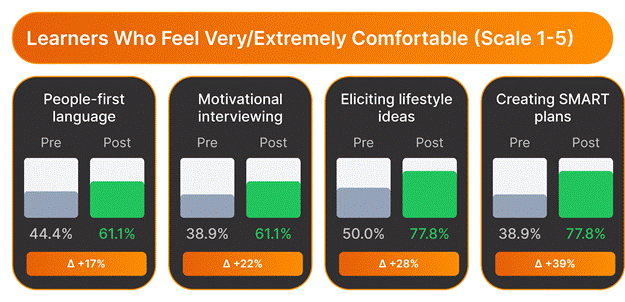
Mean comfort ratings increased an average of 12-28% across person-first language, conducting MI, eliciting lifestyle ideas and creating SMART plans, with the largest gain for SMART planning.
Among respondents rating themselves Very/Extremely confident (4-5/5), overall comfort rose, with the largest gains in creating SMART plans and eliciting lifestyle ideas. These shifts reflect movement beyond factual knowledge toward self-efficacy for initiating respectful, MI-consistent conversations and cocreating actionable plans. Measuring the 4-5 band matters because confidence is a leading predictor of whether clinicians will actually use (and persist with) new communication behaviors in practice, especially for sensitive, stigma-prone topics like obesity.
Simulation Performance
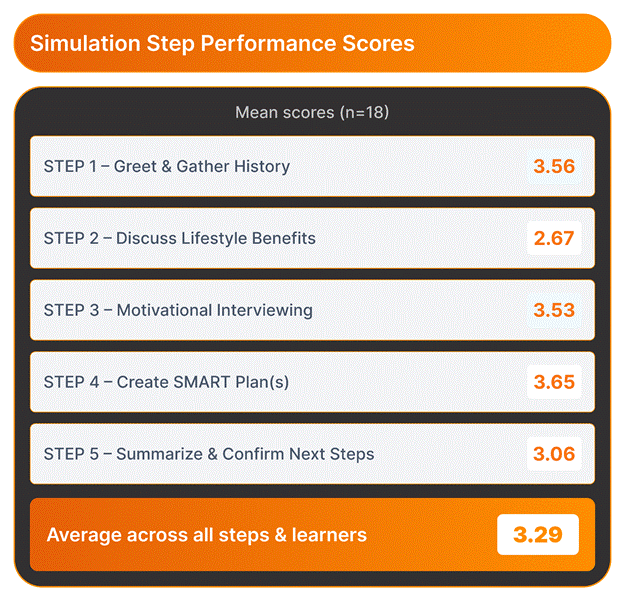
Across sessions, the mean simulation score was 3.29/5, indicating moderate proficiency. By task, creating SMART plans scored highest (3.65), while explaining lifestyle benefits and linking changes to diabetes/blood-pressure outcomes scored lowest (2.67).
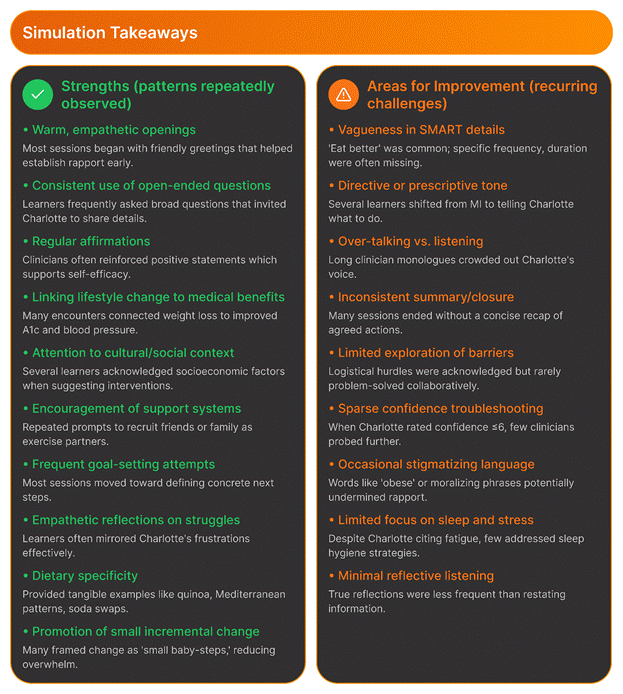
Thematic analysis highlighted recurring strengths and weaknesses, as highlighted in the table.
Simulation Value and Clinical Impact
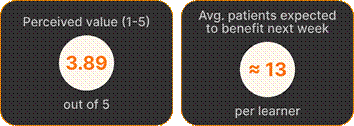
Learners rated the simulation’s educational value at nearly 4/5 and estimated an average of about 13 patients per clinician would benefit the following week.
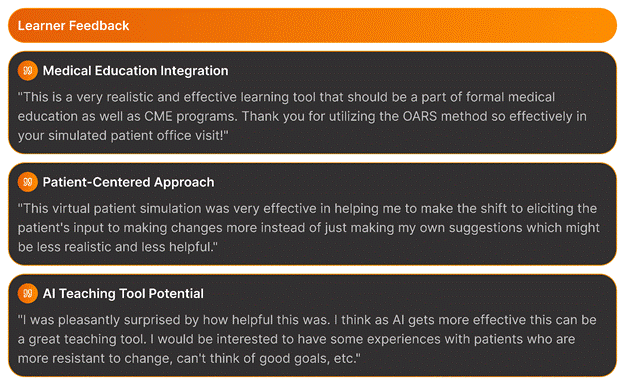
Learner comments emphasized realism, usefulness of eliciting patient ideas before offering advice and interest in scenarios with more resistant patients. Most described the experience as engaging and applicable to clinical practice.
This preliminary evaluation suggests that an AI-driven virtual-patient activity was associated with improved knowledge, confidence and observed behaviors related to MI and respectful language in obesity care. Gains were most apparent in SMART planning, consistent with the premise that structured practice converts MI concepts into concrete, measurable action — something reading alone rarely achieves.[6] The difficulty many learners had linking lifestyle discussions to disease benefits, and the tendency to drift into directive advice, mirror well-described challenges in MI training; targeted prompts and feedback loops are needed to keep conversations patient-led, reinforce reflective listening and ensure summaries lock in specific commitments.[5-7]
These findings align with emerging evidence that simulation-based etraining can strengthen MI knowledge, confidence and competence; that immersive/virtual environments are acceptable rehearsal spaces for MI-consistent talk; and that digital simulators can improve self-assessed communication skills in a low-risk environment.[6-8] For obesity specifically, respectful, person-first language is essential — stigma is common, harmful and correctable through intentional communication and training.[2–4] Our learners’ improved use of preferred terminology supports embedding stigma-reduction within skills training, not as a separate module but as a thread across history-taking, goal elicitation and planning. Clinical guidance similarly emphasizes patient-centered communication and shared decision-making in obesity care, reinforcing the educational focus of this activity.[11]
As large language model technologies mature, digital simulations can provide more granular, moment-to-moment feedback on MI-consistent behaviors (e.g., reflections vs. questions, proportion of patient “change talk”), while still requiring human oversight to assure validity and minimize bias.
Study Limitations
Findings reflect a small, self-selected cohort (16 learners, 18 sessions) and a single-arm pre–post design; improvements cannot be attributed solely to the simulation. Measures relied on short knowledge items, self-reported comfort and simulation scoring rather than independent, blinded coding of real encounters. The AI-based scoring approach, while efficient, requires continued validation. Outcomes are short-term and persistence of skills and translation to patient-level outcomes were not assessed. The case centered on a single adult phenotype (class 2 obesity with diabetes and hypertension) and generalizability to pediatrics, other comorbidities and diverse cultural contexts requires additional cases.
The Promise of Digital Simulation for Obesity Care
This AI-driven virtual-patient CME activity not only demonstrated gains in knowledge and confidence but also identifided granular areas for improvement through AI-assisted analysis of simulation transcripts across the cohort. Next steps include larger and more diverse cohorts, objective behavioral assessment, longitudinal follow-up and continued usability refinement. Overall, digital simulation — with careful human oversight — shows promise as a scalable method to help clinicians practice sensitive conversations that matter for outcomes in obesity care.[6–8,11]
Acknowledgement: Many thanks to Caroline O. Pardo, PhD, CHCP, FACEHP, for her guidance on interpretation of the research results and implications to practice.
References
- Hales CM, Carroll MD, Fryar CD, Ogden CL. Prevalence of obesity and severe obesity among adults: United States, 2017–2018. NCHS Data Brief. 2020;(360). Accessed August 18, 2025. https://www.cdc.gov/nchs/products/databriefs/db360.htm
- Emmerich SD, Fryar CD, Stierman B, Ogden CL. Obesity and severe obesity prevalence in adults: United States, August 2021–August 2023. NCHS Data Brief. 2024;(508). doi:10.15620/cdc/159281
- Puhl RM, Peterson JL. Dignity and respect for people with obesity: a health care imperative. AMA J Ethics. 2021;23(6):E525-E533. doi:10.1001/amajethics.2021.525
- Brown A, Flint SW. Weight bias and the obesity stigma: considerations for a patient-centered approach. EClinicalMedicine. 2022;47:101408. doi:10.1016/j.eclinm.2022.101408
- Pedamallu H, Savoy S, Heeke M, et al. Technology-delivered adaptations of motivational interviewing: systematic review. J Med Internet Res. 2022;24(8):e35283. doi:10.2196/35283
- Nightingale H, Wilson CA, McParlin C, et al. The effect of motivational interviewing and/or cognitive behaviour therapy techniques on gestational weight gain: systematic review and meta-analysis. BMC Public Health. 2023;23:15446. doi:10.1186/s12889-023-15446-9
- Uzun S, Gürhan N. The effect of motivational interviewing on quality of life and self-efficacy behaviors of individuals with chronic illness: a meta-analysis study. Public Health Nurs. Published online 2024. doi:10.1111/phn.13339
- Rouleau G, Gagnon MP, Côté J, et al. Virtual patient simulation to improve nurses’ relational skills in a continuing education context: a convergent mixed-methods study. BMC Nurs. 2022;21:1. doi:10.1186/s12912-021-00740-x
- Anastasiadou D, Navarro-Solano L, Martínez-González M, et al. Virtual reality–based self-conversation using motivational interviewing techniques for adults with depression: proof-of-concept study. Front Psychiatry. 2023;14:1138840. doi:10.3389/fpsyt.2023.1138840
- Holderried F, Stegemann-Philipps C, Herschbach L, et al. A generative pretrained transformer–powered chatbot as a simulated patient to practice history taking: prospective, mixed methods study. JMIR Med Educ. 2024;10:e53961. doi:10.2196/53961
- Holderried F, Stegemann-Philipps C, Herrmann-Werner A, et al. A language model–powered simulated patient with automated feedback for history taking: prospective study. JMIR Med Educ. 2024;10:e59213. doi:10.2196/59213
- Massouh A, Kiwan S, Rahal M, et al. Assessing reflective simulation-based e-training with motivational interviewing to address adolescent alcohol and nicotine use: randomized controlled trial. BMC Med Educ. 2024;24:5711. doi:10.1186/s12909-024-05711-9
- Nadolsky K, Addison B, Agarwal M, et al. American Association of Clinical Endocrinology consensus statement: addressing stigma and bias in the diagnosis and management of patients with obesity/adiposity-based chronic disease and assessing bias and stigmatization as determinants of disease severity. Endocr Pract. 2023;29(6):417-427. doi:10.1016/j.eprac.2023.03.272

Boris Rozenfeld, MD, has over 11 years of experience in medical education and currently serves as chief learning officer at Xuron, specializing in AI-powered conversational simulations for teaching interpersonal, communication and clinical reasoning skills.

Meg Oliverio, MD, has been a medical director at Pri-Med since 2019, where she develops evidence-based continuing medical education to support primary care clinicians with innovative, practical programs that help them deliver high-quality, up-to-date patient care.

Ian Nott is the CEO of Xuron, leveraging nearly a decade of experience in spatial computing and software development to lead innovations in AI-powered virtual human simulations for medical training.